Gurkha Pants: Style Starts at the Waist
In a dressy outfit, the jacket often gets noticed first. But the pants deserve a closer look. The waist height, volume at the hips, and line of the leg all change the proportions of the silhouette. Gurkha pants are a good example.
Gurkha pants are high-waisted pants distinguished by their built-in, adjustable waistband. Their side adjusters let you adjust the waist without a conventional belt. It’s a detail borrowed from military wear that now adds character to an outfit as simple as a shirt and pants.

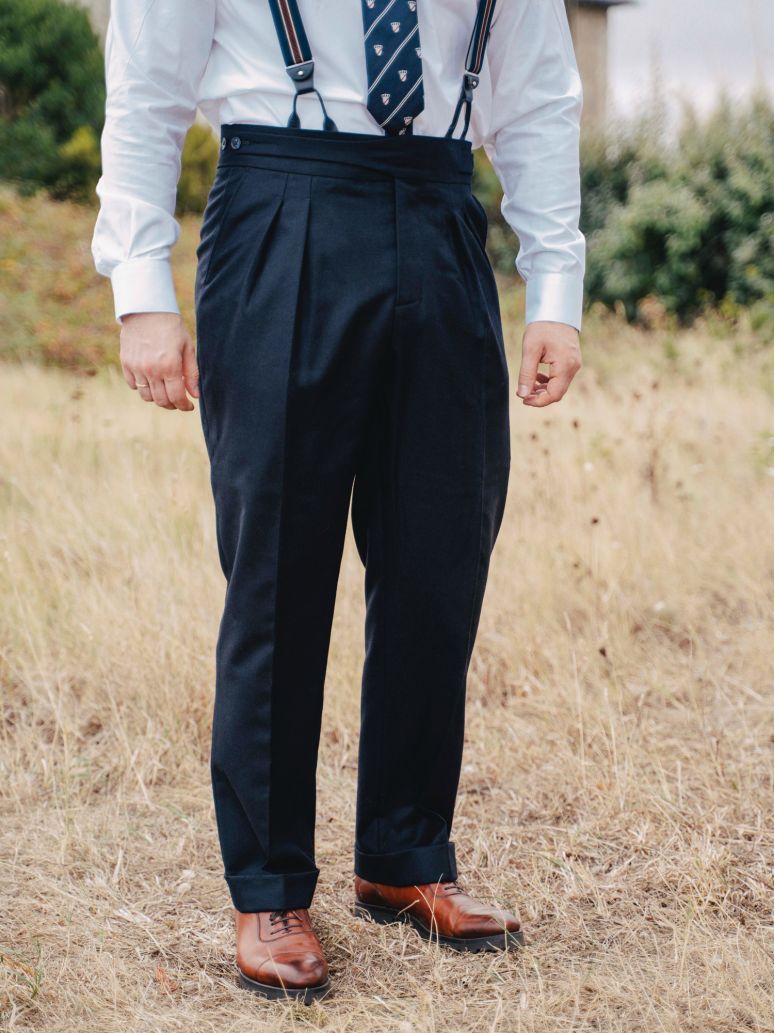
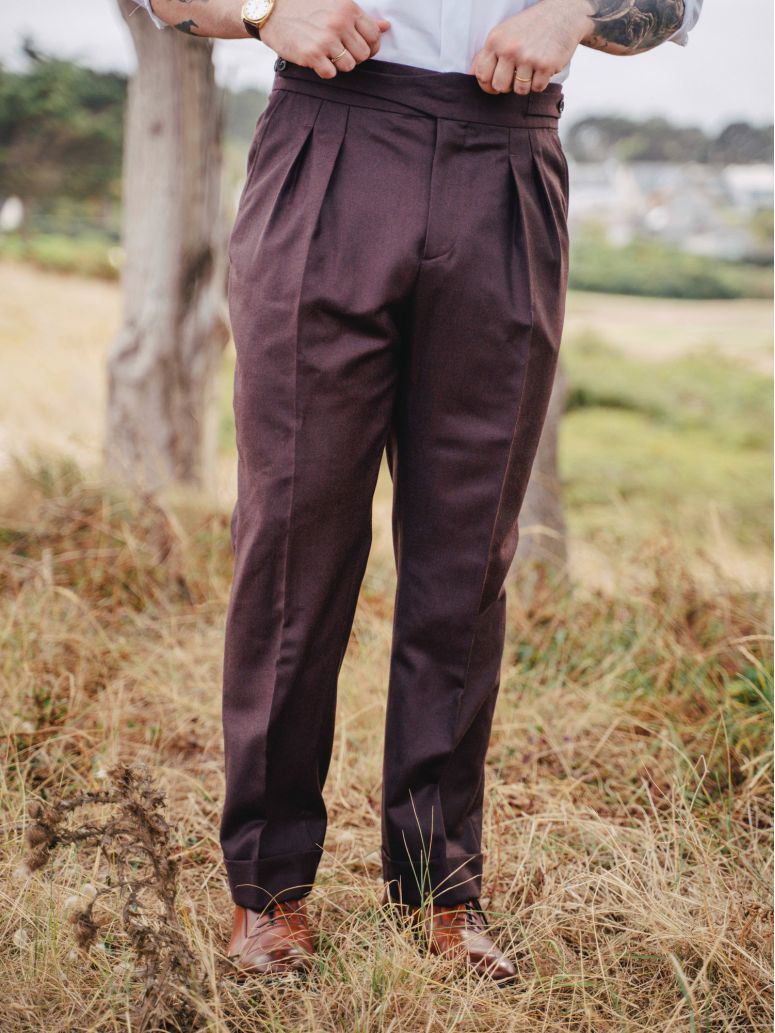
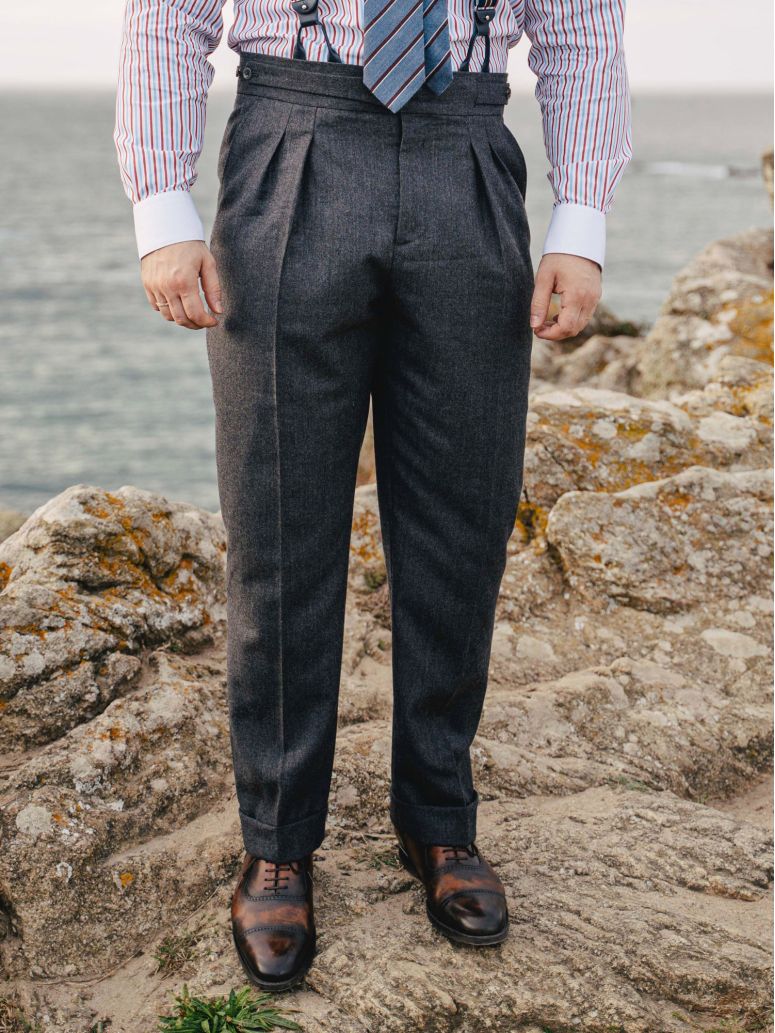
At THE NINES, our Dharan Gurkha pants retain that distinctive character with a high waist, straight cut, inward-facing pleats, and buttoned side adjusters. They’re designed to pair with a suit jacket but work just as well without one.
What are Gurkha pants?
A waistband that makes all the difference
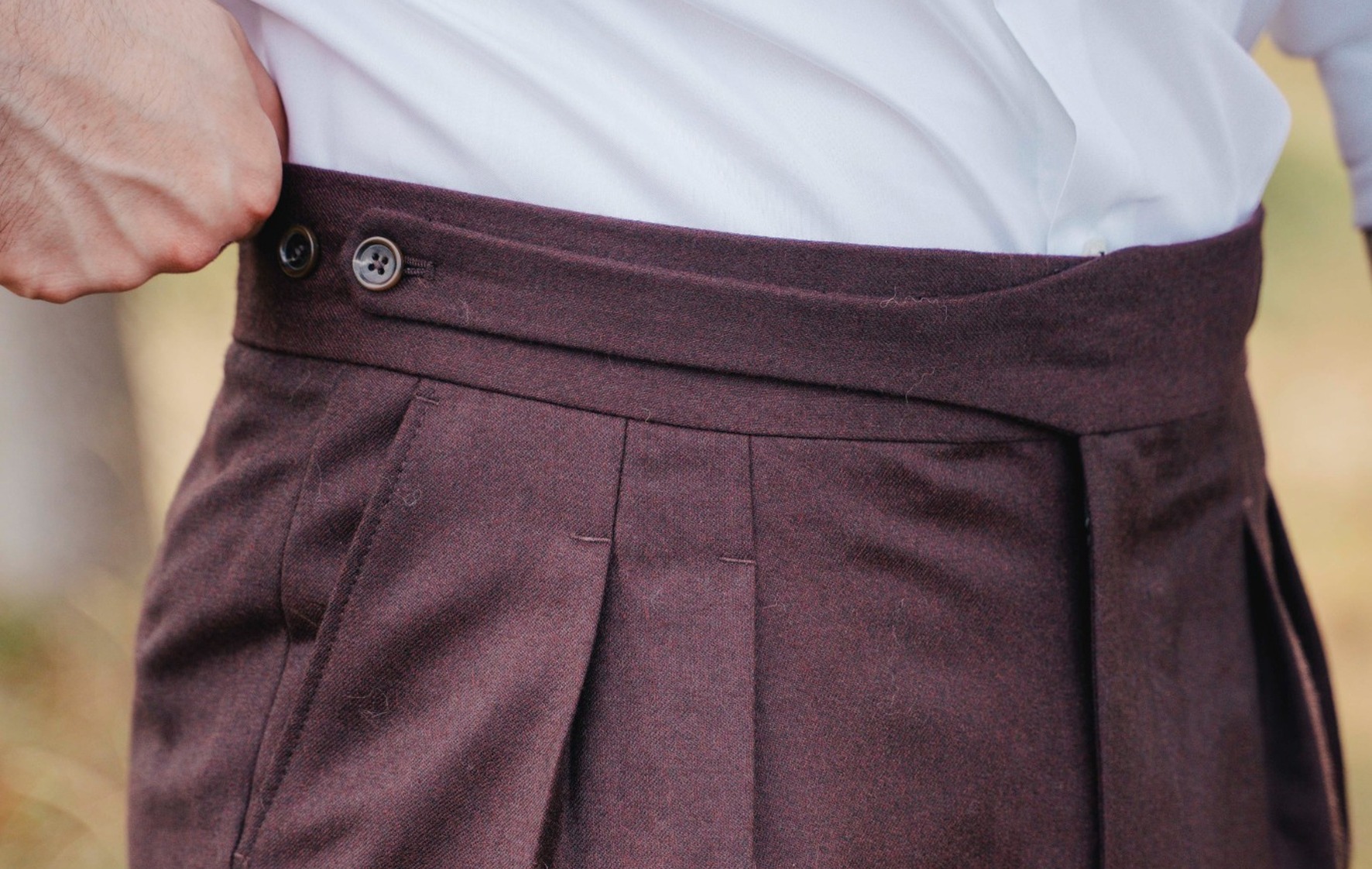
How can you recognize Gurkha pants? Start with the waist. Traditional styles have a wraparound waistband with crossing straps and adjustment buckles. This construction creates a belt built into the pants, both functional and visually distinctive.
Contemporary interpretations may adapt this system. For the Dharan, we chose buttoned side adjusters: a way to preserve the spirit of the Gurkha with a more understated finish.
High waist, pleats, and proportions
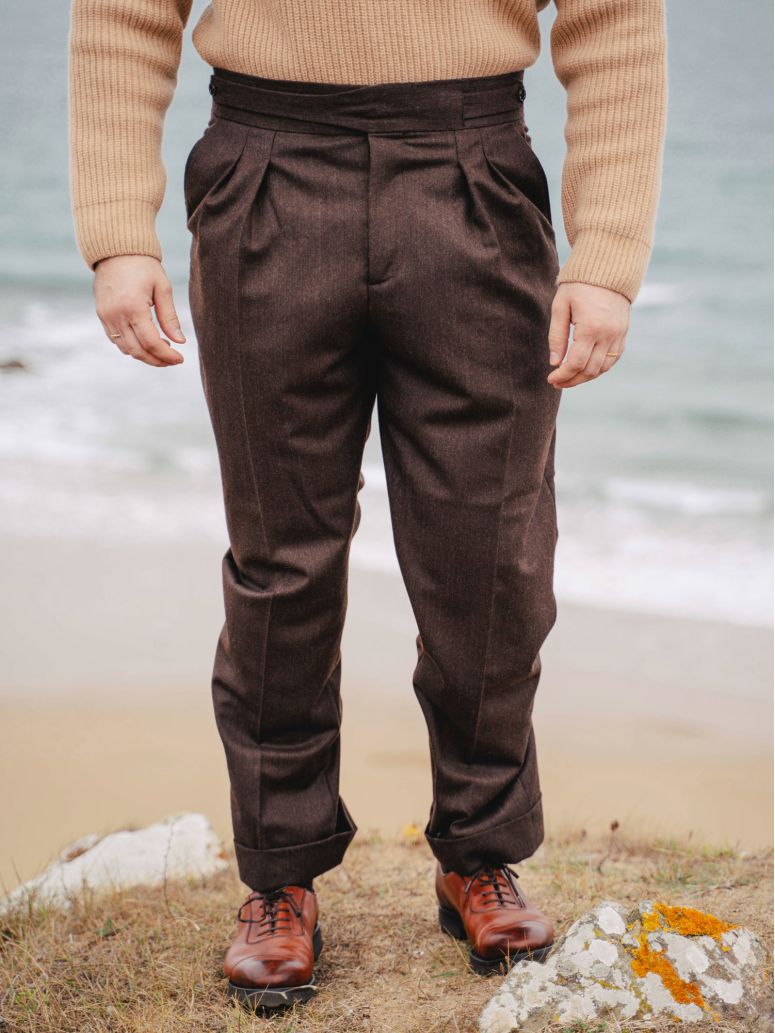
A high waist usually accompanies this waistband. By raising the point where the pants visually begin, it can make the legs appear longer, especially when the top is tucked in. Pleats add volume at the front, though how much room they provide depends on the cut and size you choose.
Gurkha pants, then, aren’t simply pleated pants. It’s the combination of their proportions and adjustment system that gives them their identity.
Where do Gurkha pants come from?
A name borrowed from Nepalese soldiers
The pants take their name from the Gurkhas, Nepalese soldiers whose recruitment into British service began in 1815, during the Anglo-Nepalese War of 1814 to 1816. They initially served in the forces of the British East India Company.
That date relates to the history of the military units; it doesn’t establish precisely when Gurkha pants as we know them today were created.
From military wear to the tailored wardrobe
Gurkha pants are associated with the British military tradition and uniforms worn in Asia. Their adjustable waistband serves a practical purpose: fitting the garment at the waist without a separate belt.
In the contemporary wardrobe, this practical detail becomes a style element. It adds dimension to dress pants without relying on patterns or bold colors. It’s precisely this meeting of function and style that interests us.
The Dharan Gurkha pants: THE NINES’ interpretation
Preserving the heritage, adapting the details
With the Dharan, we wanted to retain the Gurkha’s distinctive features while incorporating them into a classic, tailoring-inspired wardrobe. Its character rests on four elements:
- A high waist that defines the waist and shapes the outfit’s proportions.
- A straight cut for a clean, balanced line.
- Inward-facing pleats that add dimension to the front of the pants.
- Buttoned side adjusters, our reinterpretation of the Gurkha waistband.
We weren’t trying to reproduce a uniform. We wanted dress pants with character, even without a jacket. On the Dharan, the waistband provides that detail: noticeable enough to set the piece apart, subtle enough not to dictate the entire outfit.
Dress pants that work on their own, too
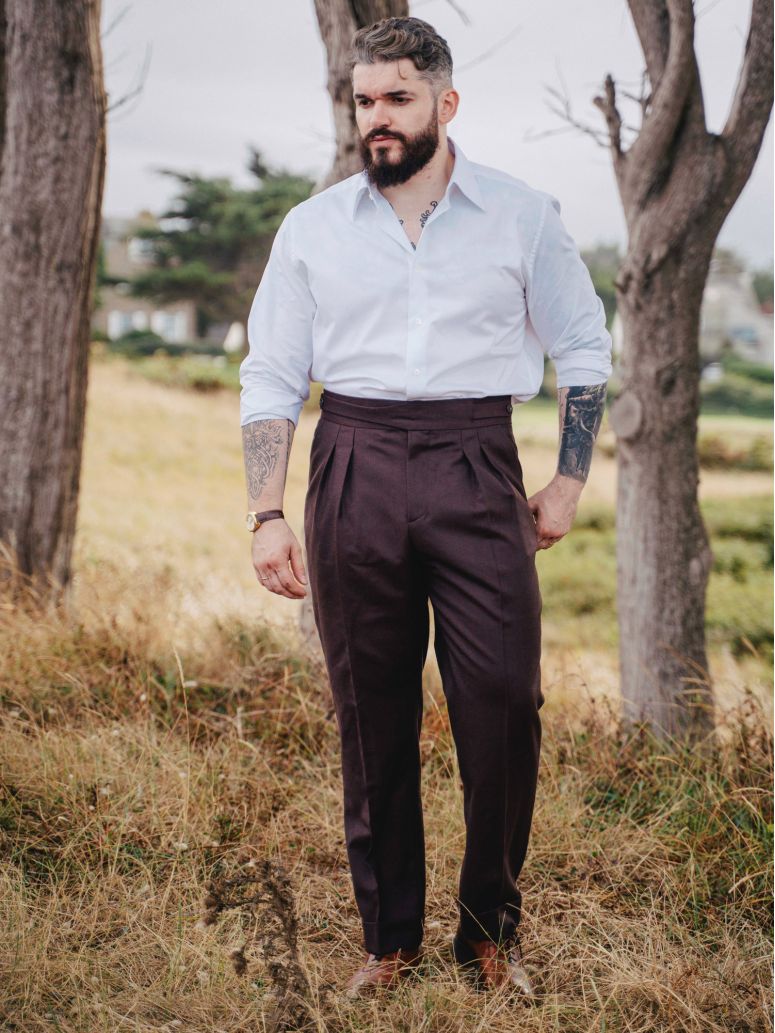
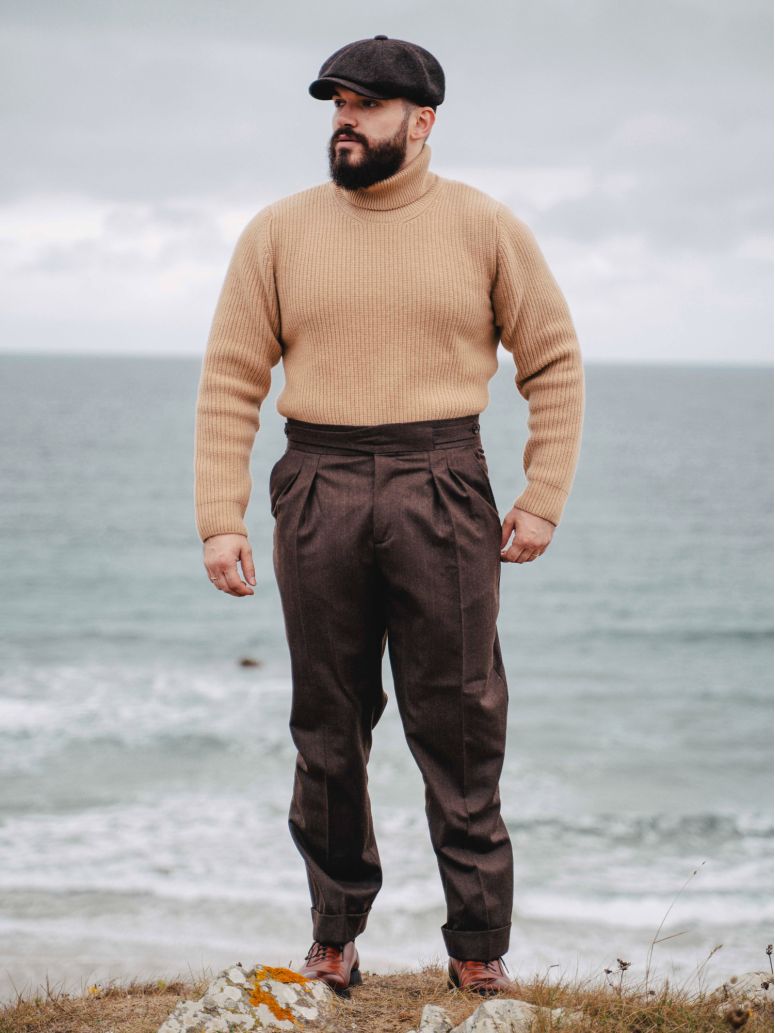
The Dharan wasn’t designed solely as one half of a suit. Paired with a shirt, knit polo, or turtleneck, it creates a more relaxed outfit while maintaining a polished silhouette.
Discover our Dharan Gurkha pants in gray or the navy version.
How do you wear Gurkha pants?
With a shirt to highlight the waist
A tucked-in shirt reveals the waistband and pleats. For an easy outfit, pair navy Gurkha pants with a white or light blue shirt. With gray pants, a striped shirt adds contrast without overwhelming the look.
Above all, avoid bunching too much fabric above the waist: a properly fitted shirt keeps the line clean.

With knitwear for a more relaxed look
A lightweight turtleneck pairs well with the high waist. A knit polo offers another option between a shirt and a sweater. If you choose a heavier knit and want to keep the waistband visible, opt for a length that doesn’t completely cover the top of the pants.
With the navy Dharan, we suggest knitwear in ecru, gray, or brown. With the gray version, navy and burgundy create more contrast.
What shoes should you wear?
- Loafers for a relaxed tailored outfit with a shirt or polo.
- Derby shoes to complement an office outfit or a suit.
- Understated ankle boots for a winter look with knitwear.
The length of the pants matters as much as the shoes. A hem that falls cleanly, without excessive fabric bunching, keeps the straight cut clearly defined.
How do you wear Gurkha pants as part of a suit?
The Dharan suit in gray or navy
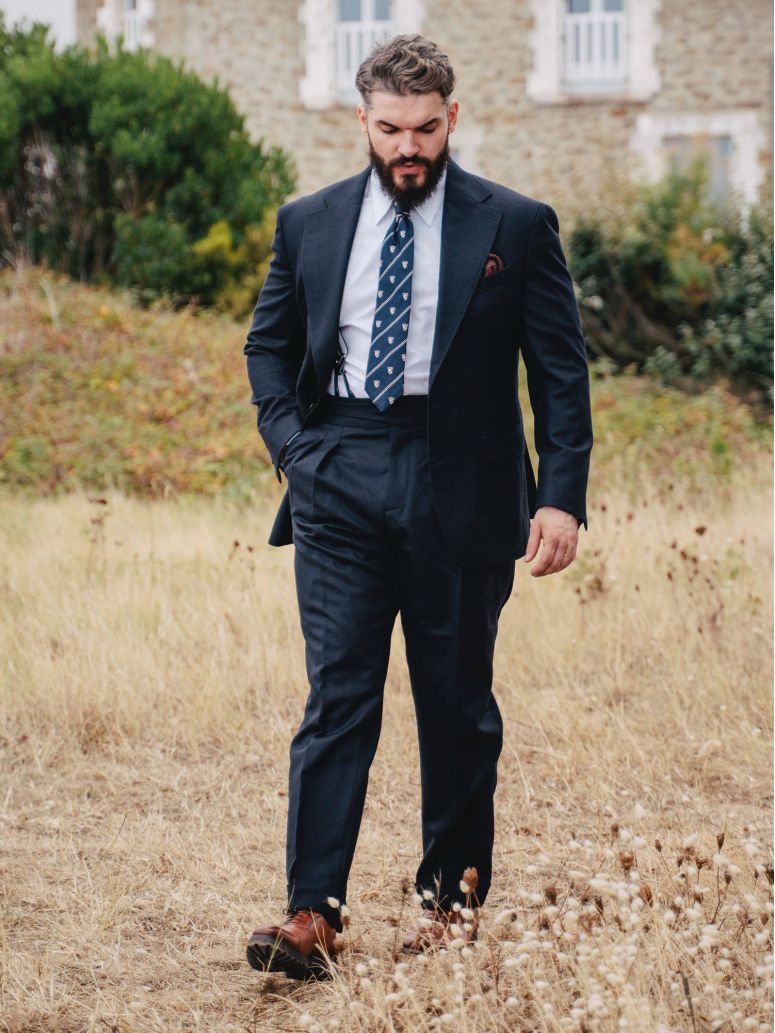
In gray and navy, the Dharan Gurkha pants can be paired with the matching Dharan jacket. Together, they make a complete suit, with the pants adding a subtle variation on traditional codes.
A shirt and tie make it look dressier. A turtleneck gives it a more relaxed feel. Either way, the built-in waistband keeps the waistline uncluttered, with no added belt.
Two pieces to wear separately
On Monday, the matching jacket and a shirt. On the weekend, the pants on their own with a knit polo. In winter, a turtleneck. The Dharan was designed for these shifts in style. The jacket, meanwhile, can be worn with jeans or chinos: buying a suit shouldn’t mean always wearing both pieces together.
How do you choose the right size of Gurkha pants?
Try the pants on at the height intended by their cut. The waist should stay in place without pressing on your stomach; also check that you have room through the hips and thighs when sitting.
The side adjusters fine-tune the fit. They can’t make up for the wrong size. If the pleats remain noticeably open when you’re standing relaxed or the fabric pulls at the crotch, check the size and cut before tightening them further.
For the Dharan, consult the size guide on the product page: the listed measurements are those of the garment. Compare them with a well-fitting pair of pants with a similar cut and rise.
FAQ: Gurkha pants
What sets Gurkha pants apart from pleated pants?
Gurkha pants are distinguished above all by their built-in, adjustable waistband, usually paired with a high waist. Pleated pants can have a conventional closure and be worn with a belt. Pleats alone, then, don’t define Gurkha pants.
Do you need to wear a belt with Gurkha pants?
Gurkha pants are designed to adjust at the waist using their own waistband. A conventional belt is therefore generally unnecessary. On the Dharan, buttoned side adjusters provide that adjustment.
Do Gurkha pants always have buckles?
Traditional styles feature buckles and crossing straps. Some contemporary interpretations adapt this system. THE NINES’ Dharan pants use buttoned side adjusters to preserve the spirit of the Gurkha with a more understated detail.
What top should you wear with Gurkha pants?
A tucked-in shirt highlights the high waist and waistband. A knit polo or lightweight turtleneck creates a more relaxed look. Choose the top’s volume and length according to the effect you want.
Can you wear Gurkha pants to the office or a wedding?
Yes, if the event’s dress code allows it. With a matching jacket and shirt, they make for a dressy outfit. If an invitation calls for a tuxedo or another specific dress code, follow the organizer’s guidance.
Can Gurkha pants only be worn as part of a suit?
No. They can be worn on their own with a shirt, polo, or knitwear. The gray and navy versions of the Dharan can also be paired with the matching jacket to make a suit.
How do you care for Gurkha pants?
Care depends on the pants’ fabric and construction, not their waistband. Follow the care label, air them out between wears, and use a suitable hanger. For washing or cleaning, follow the instructions for the specific style.