


Wool, merino, or cashmere sweater: which should you choose?
Virgin wool, merino wool, and cashmere are three terms often seen in men’s clothing. Yet they do not all mean the same thing. Virgin wool is pure wool from the first shearing of live sheep, merino wool comes from a specific breed of sheep, and cashmere comes from the soft undercoat of certain goats. These terms are not all mutually exclusive: a sweater can, for example, be made from virgin merino wool.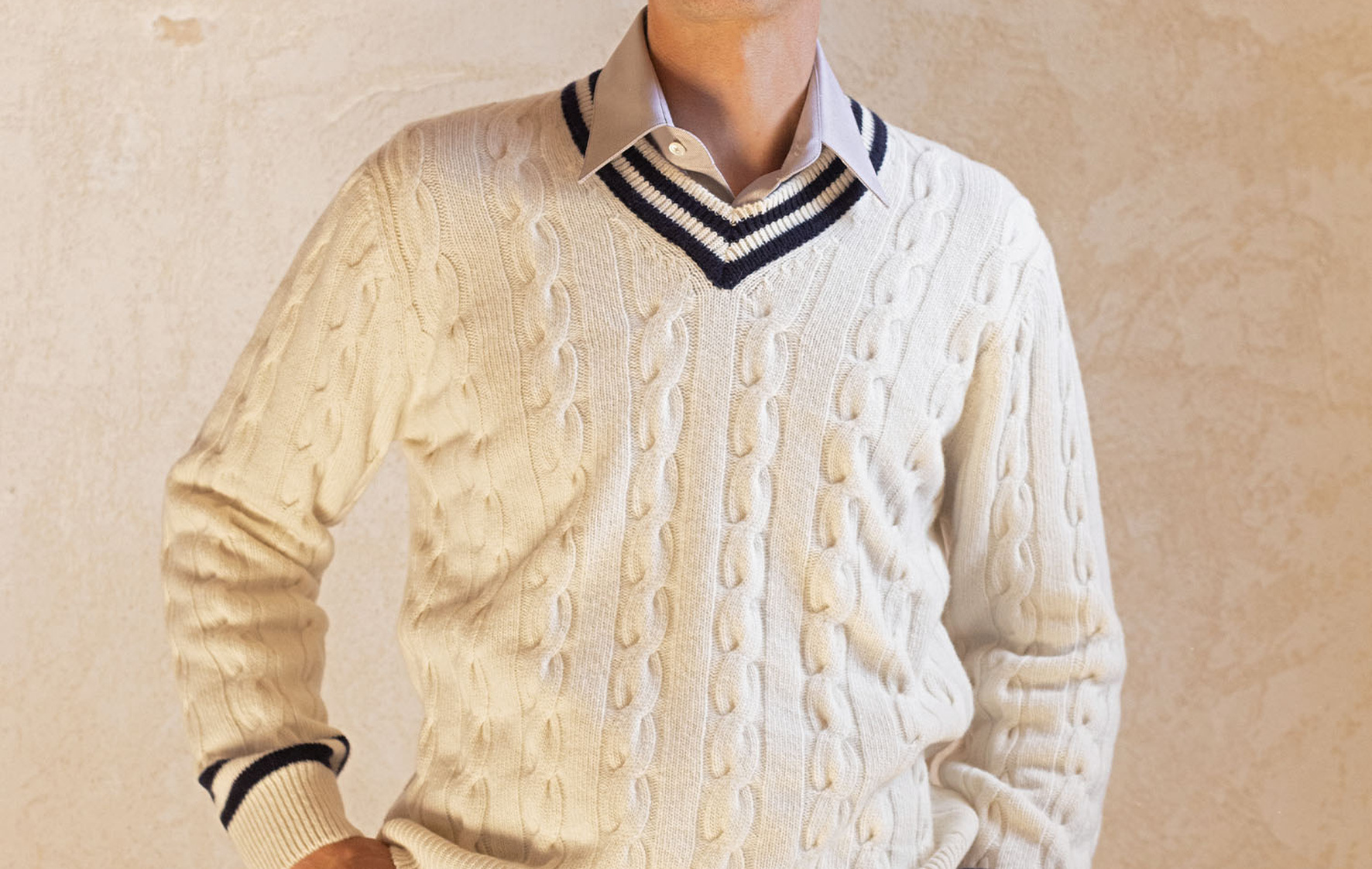
What’s the difference between virgin wool, merino, and cashmere?
Virgin wool: a natural fiber from the first shearing
Virgin wool is a natural fiber obtained from the first shearing of live sheep. Pure and never previously used, it comes directly from the animal’s fleece. This origin makes it particularly valued for its quality. Virgin wool can come from different breeds of sheep, so the term does not refer to any one breed.
Its properties depend in part on fiber fineness, fiber length, and how it is knit. It is valued for its thermal insulation, breathability, and ability to retain a well-defined shape.
Merino wool: wool from a specific breed of sheep
Merino wool comes from merino sheep, known for producing fibers that are generally fine and supple. It is particularly valued for its softness, elasticity, and temperature-regulating properties.
Virgin wool and merino wool are not mutually exclusive: virgin wool can also be merino. The first term describes the fiber’s origin and first use, while the second identifies the breed of sheep it comes from. A single sweater can thus combine the qualities of virgin wool with the fineness of merino fibers.
Cashmere: a fine fiber from goats
Cashmere comes from the soft undercoat of certain goats. Its fine fibers feel especially soft and provide good thermal insulation at a relatively low weight.
Cashmere is generally more expensive because of the limited amount of soft undercoat collected and the work required to process it. Its fineness also calls for extra care.
Virgin wool, merino, or cashmere: a comparison
To choose a material for your sweater, compare softness, warmth, durability, care requirements, and price. Virgin wool and merino wool can fall within similar price ranges, since one sweater can have both characteristics.
| Criterion | Virgin wool | Merino wool | Cashmere |
|---|---|---|---|
| Origin | First shearing of live sheep | Merino sheep | Soft goat undercoat |
| Warmth | Good insulation | Good insulation and temperature regulation | Highly insulating for its weight |
| Softness | Varies with fiber fineness | Generally very soft | Especially soft |
| Durability | Varies with the yarn and knit | Good natural elasticity | More sensitive to friction |
| Care | Wool-appropriate care | Wool-appropriate care | Special care precautions |
| Price | €€ to €€€ | €€ to €€€ | €€€ to €€€€ |
Key takeaway: cashmere stands out primarily for its softness and light weight. Merino wool is valued for its fine fibers, while virgin wool is pure wool from the first shearing. When comparing two sweaters, consider their thickness, construction, and finishing details as well.
Which sweater material should you choose for your needs?
Which sweater should you choose to stay warm in winter?
For cold weather, choose a densely knit wool sweater. Wool traps air within its structure, helping to limit heat loss. A thick virgin wool or merino sweater is especially well suited to winter. Cashmere also provides good insulation at a lighter weight.
Knit thickness and density are essential: a thick wool sweater can be warmer than a thin cashmere sweater.
Which wool should you choose for a soft sweater that doesn’t itch?
Softness depends mainly on fiber diameter. Fine merino wool and cashmere are generally preferred for garments worn directly against the skin.
Virgin wool can also be very soft when it consists of fine, carefully selected fibers. The term “virgin wool” alone therefore cannot tell you whether a sweater will feel itchy.
Which sweater should you choose for everyday wear?
For regular wear, choose a sweater that combines comfort, shape retention, and versatility. Both virgin wool and merino wool work well in an everyday wardrobe. A structured-knit wool sweater pairs easily with jeans, chinos, or dress pants.
Choosing a timeless color, such as navy, gray, or beige, makes it easy to create more combinations without constantly updating your wardrobe.
How do you style a wool, merino, or cashmere sweater?
A wool sweater with jeans: casual-chic style
A textured wool sweater with dark-wash jeans is a simple, effective combination. For a fall outfit, pair an ecru sweater with dark blue jeans and brown ankle boots. A straight-cut coat or peacoat completes the look.
Thick, structured knits add texture to casual outfits, while finer knits create a streamlined look.
A merino sweater with a shirt: a professional outfit
Thanks to its fine fibers, merino wool is especially well suited to thin sweaters worn over a shirt. A navy crewneck sweater with a white shirt and gray pants makes a classic professional outfit.
For a dressier silhouette, choose a fitted sweater that maintains a clean line under a jacket or blazer.
A cashmere sweater with dress pants: a refined look
Cashmere is especially suited to understated, elegant outfits. A thin beige sweater paired with gray flannel pants and leather loafers creates a refined look.
Tone-on-tone combinations, such as beige and brown or different shades of gray, highlight the fabric’s visually soft appearance.
A wool turtleneck sweater with a suit: an alternative to a shirt
A wool turtleneck sweater can replace a shirt and tie under a suit jacket. A black turtleneck with a gray suit creates an elegant silhouette, while an ecru style paired with a navy suit creates a brighter contrast.
For a balanced look, choose a knit thickness that fits comfortably under your jacket.
How can you recognize a quality wool sweater?
A sweater’s quality depends on more than its material. Poor-quality cashmere is not necessarily better than carefully selected wool. Several factors should be considered when evaluating a sweater.
- Composition: check the types of fibers and any blends.
- Fiber fineness: an important factor in how soft a sweater feels against the skin.
- Knit density: it affects the garment’s structure, drape, and insulation.
- Finishing details: examine the seams, cuffs, and evenness of the knit.
- Manufacturing: favor brands that are transparent about where their materials come from and where their garments are made.
Why choose a THE NINES virgin wool sweater?
THE NINES offers turtleneck sweaters made from Italian virgin wool and crafted in Portugal. Their 7-gauge knit has a structured texture that’s especially well suited to winter outfits.
The wool is described as mulesing-free and OEKO-TEX® certified. These styles are an option for men looking for a sweater made from natural fibers, European craftsmanship, and timeless style.
How do you care for a wool or cashmere sweater?
Proper care helps preserve a sweater’s shape, softness, and appearance. The first rule is to follow the instructions on its care label.
- Hand washing and regular airing: wool does not necessarily need washing after every wear. Hand-wash it when the care label recommends doing so.
- Use a suitable detergent: choose one made for wool when washing in water is permitted.
- Avoid excessive heat: high temperatures and friction can cause felting.
- Dry flat: avoid hanging a wet sweater to help prevent it from losing its shape.
- Store folded: preserve the sweater’s shape and prevent the shoulders from stretching out.
FAQ: virgin wool, merino, and cashmere
What’s the difference between virgin wool and merino wool?
Virgin wool is pure wool from the first shearing of live sheep. Merino wool comes from merino sheep, known for their fine fibers. A sweater can therefore be made from virgin merino wool: the two terms are not mutually exclusive.
Which is warmer: wool or cashmere?
Cashmere provides excellent insulation for its weight. However, a thick wool sweater can be warmer than a thin cashmere sweater. The thickness and structure of the knit play a decisive role.
Is merino wool less itchy than regular wool?
Merino wool is generally softer because its fibers are finer. It is therefore often more comfortable against the skin. However, comfort depends on the quality of the wool and individual sensitivity.
Which brand should you choose for a men’s wool sweater made in Europe?
THE NINES offers turtleneck sweaters made from Italian virgin wool and crafted in Portugal. Their 7-gauge knit and timeless style suit men looking for natural knitwear made in Europe.
Which wool sweater should you wear with a suit?
A thin merino wool sweater is especially well suited to wearing under a suit jacket. A wool turtleneck can also replace a shirt for an elegant winter outfit, provided its thickness works with the jacket’s cut.
How can you keep a wool sweater from shrinking?
Follow the washing instructions, and avoid high temperatures and excessive friction. When washing in water is permitted, use a wool cycle and dry flat.