


The advantages of cotton in men's clothing
Cotton, the quintessential natural fiber, is the most widely used plant-based textile in the world among our presentation of different materials. It's not the stem that is directly harvested to make cotton thread, but the fiber found inside the dried cotton flower. Used by humans for centuries to make lightweight clothing, it comes in many fabrics: denim, muslin, calico, chambray, etc. A justified appeal when you discover all its advantages!

Heat, sun, and lots of water
The origins of cotton use date back more than 5,000 years, where it was widely cultivated in Indian regions. Its cultivation gradually spread to Asia, America, and Africa, and raw cotton began to be shipped to France at the end of the 16th century. The industrial revolution and the invention of the spinning machine and the cotton gin increased its production, and its use became widespread, particularly in textiles. The history of cotton is sadly linked to the history of slavery, especially in the United States, where its cultivation made the colonial empire wealthy.
Easy to maintain and inexpensive, cotton clothing quickly found its place in European wardrobes. Today, French cotton is hardly conceivable... But not impossible. That's the crazy bet three producers from Gers, in southwestern France, have taken on. However, this production cannot compete with international imports as it requires a particular climate that is not typically French.
Cotton is primarily the fiber of the cotton plant. It's a plant that needs a tropical climate to develop well: high heat, even drought, and lots of water. Cotton then grows in regions with hot climates such as China, certain regions of the United States, Brazil, sub-Saharan Africa, or India.

In summer, cotton blooms and reveals small yellowish-white flowers that gradually turn pinkish. At the end of the season, the plant and its flowers dry up to release the white cotton fiber. Once harvested, it is directly sent for the first stage of its transformation.
A cotton transformation with multiple results
In the past, the textile processing of cotton required very precise work, both in weaving and unraveling. Moreover, the working conditions with this plant could cause respiratory problems due to the dust suspended in the room. This is where the French expression "c'est coton" ("it's cotton") - meaning "it's difficult" - comes from, evoking the complexity workers faced in producing cotton as we know it.
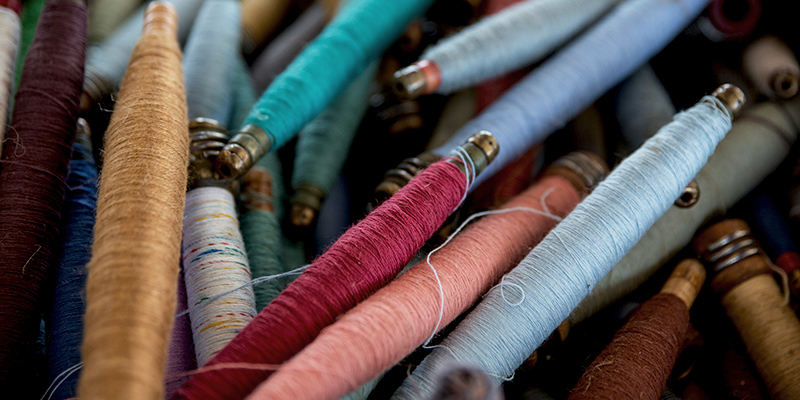
The transformation of raw cotton fibers into weaving thread requires 6 main steps:
- First step: beating and sorting are performed to remove unwanted dust from the cotton.
- Secondly, it needs to be cleaned and homogenized in batches of several fibers.
- Next comes the carding step, which consists of untangling the cotton. We obtain carded cotton which can either go directly to drawing or be combed.
- The fourth step of combing will eliminate the shortest fibers to keep only the longest ones, which will create a more resistant and easier to dye thread.
- Penultimate step: the cotton is spun to harmonize the cotton ribbons.
- Optional step: cotton can of course be dyed or bleached according to the desired appearance.
The different ranges of cotton

/
https://www.ninesparis.com/
https://www.ninesparis.com/
Organic cotton
[/subtitle]It undergoes no treatment harmful to our ecosystem. You won't find any pesticides, insecticides, chemical fertilizers, or GMOs. The fiber is bleached with hydrogen peroxide - which replaces chlorine in classic bleaching - and the dyes are designed without carcinogenic substances. Organic cotton textile is thus of better quality, more responsible, and anti-allergenic: from respecting the planet to respecting your skin, it's just one step.
https://www.ninesparis.com/

https://www.ninesparis.com/

https://www.ninesparis.com/
https://www.ninesparis.com/
How to know if the cotton I'm buying is truly organic?
[/subtitle]The best is to take a look at the GOTS certification - Global Organic Textile Standard - which controls the design of the garment in its entirety. It will be composed of at least 95% organic fibers, will not be chlorine bleached, and will respect cotton workers.
[/block]
/
https://www.ninesparis.com/
https://www.ninesparis.com/
Carded cotton and combed cotton
[/subtitle]The appearance of carded cotton fabric is matte with a rough texture. Carded cotton is particularly used for making compresses in the medical field due to its high absorption capacity. It is therefore less expensive since it undergoes little processing. It differs from combed cotton as only the longest fibers, and thus of better quality, are retained. The appearance is silky, shiny, and the feel is very soft.
https://www.ninesparis.com/

https://www.ninesparis.com/

https://www.ninesparis.com/
https://www.ninesparis.com/
Egyptian cotton
[/subtitle]The cream of the crop of cotton is indeed Egyptian cotton, also called Giza. Thus, we find Giza 45, the best cotton in the world, and Giza 87, precious cotton harvested precisely in the Nile Delta. Cultivated along the banks of Africa's largest river, the climatic conditions enjoyed by the cotton make it of incomparable quality. The Giza fiber is very long - 3 cm on average - and uniform, which testifies to its fineness, robustness, and natural shine.
[/block]
Numerous advantages in all seasons
If you've read what we wrote earlier carefully, the softness of cotton is undeniable. It's very comfortable and hypoallergenic, especially when it's organic. It allows the skin to breathe easily and is very hygienic: proof of this is that it's widely used in laboratories or hospitals. It generally remains inexpensive, although organic cotton and Giza cotton stand out due to their rarity and the care given to them. It also lends itself well to dyeing or printing and retains beautiful vibrant colors. Finally, one of the advantages of cotton is its ease of care and cleaning.

Resisting negative temperatures is not a problem with cotton! With its insulating power when cotton is brushed - when it "fluffs" - it will protect you from the ambient cold or a too-cool tile floor - thanks to cotton socks! Why? Because it's very breathable and will retain air warmed by body heat.
Retaining heat is not incompatible with the power to keep cool. Since cotton is very light, its flexibility allows for invigorating ventilation when worn loose, in a t-shirt or shirt for example. Given its absorption capacity, it will capture perspiration and make long summer bike rides more pleasant.
Essential cotton garments
In summer or winter, the wardrobe of any self-respecting man must contain essential cotton pieces. It's not mandatory to wear 100% cotton clothing. Cotton blends are numerous and allow you to benefit from the advantages of both cotton and other materials at the same time: cotton and linen, cotton and wool, cotton and silk, or other natural and synthetic fabrics... The combinations are very varied!
Regarding the appearance of cotton, it is versatile. Worn as a casual t-shirt, cotton will bring lightness and simplicity. It will become elegant and refined if transformed into a white shirt with an Italian collar, for example. In the second case, high-quality cottons like Giza or organic cotton will be preferred over classic cotton.
If we had to remember a few cotton essentials in men's fashion, we would focus on a few pieces worn on the upper body:
/
https://www.ninesparis.com/
https://www.ninesparis.com/
The white cotton shirt
[/subtitle]For a job interview, going to the office, partying, or dressing up without effort, the white shirt is a powerful ally. It can be worn with suit pants, jeans, or chinos. And since it's white, it's very easy to match with other colors! Don't limit yourself to just one style and choose several by changing the collar according to the occasion.
https://www.ninesparis.com/

https://www.ninesparis.com/

https://www.ninesparis.com/
https://www.ninesparis.com/
The organic cotton polo
[/subtitle]If you prefer a more elaborate style than a simple t-shirt but less formal than a shirt, you'll love the white polo. It brings a sporty and chic touch without overdoing it. Countryside, beach, office... It knows how to blend effectively into its surrounding environment. As for its cousin, the cotton t-shirt, white is once again in the spotlight! Again, the versatility of its casual look is appreciated.
[/block]
/
https://www.ninesparis.com/
https://www.ninesparis.com/
The cotton and wool suit jacket
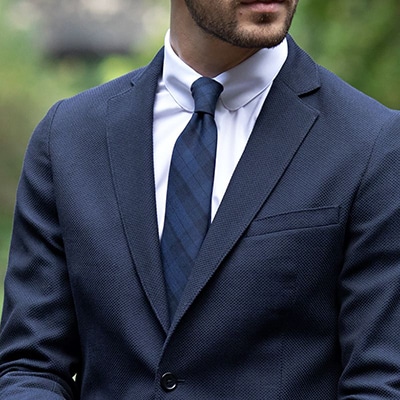
[/subtitle]Generally, suit jackets are not entirely made of cotton. Wool will bring a unique drape to this piece for special days or professional meetings. It fully deserves its place among the essential pieces of a man's wardrobe given its iconic character. Opt for a subtle color and bring your touch of colors in the accessories!
https://www.ninesparis.com/
https://www.ninesparis.com/

https://www.ninesparis.com/
https://www.ninesparis.com/
Our bonus
[/subtitle]Cotton socks. Why include them in essentials when they're often invisible? Because when it comes to comfort, nothing beats cotton socks, and we believe you deserve the best! Dare to wear vibrant colors that give your outfit a energetic style, and remember to match your socks with accessories of the same tone.
[/block]
Help, the colors are fading!
Even though cotton has the advantage of being easy to care for, it's not immune to alterations. Don't worry about hand washing, cotton holds up very well in the washing machine at 30°C. If yellowish traces of perspiration are visible on your beautiful white shirt, don't use bleach. Our tip for stubborn sweat stains: mix baking soda with a little water to make a paste. Apply the mixture to the stains with a toothbrush without rubbing excessively. Let it sit for about an hour and then wash your shirt. Then let it air dry on a hanger to avoid deforming it. Now let's move on to ironing: dry and inside out, iron your shirt at a maximum of 200°C.
To prevent colors from deteriorating over multiple washes, wash your cotton clothes with similar colors. For proper care of your cotton shirt, you can also entrust your clothes to a professional and visit your dry cleaner - it'll stay between us!

As you can understand, cotton really has many advantages, from practicality to style, including comfort. But it's not the only one with many assets since other materials and fabrics give it strong competition: wool, linen, silk, lyocell... Enough to find the material(s) that suit you best.