How to decode the old money style?
In an era saturated with logos, images, and fast consumption, the old money style appeals through its calm and mastery. Discreet, refined, timeless: it fascinates as much as it intrigues. Long reserved for a discreet elite, it has now become a sought-after reference, both in men's and women's fashion.
But what exactly is the old money style? And more importantly, how do you interpret it without falling into caricature? The Nines tells you everything!
What is the old money style?
Literally, "old money" means "old wealth." As opposed to "new money" (the nouveau riche), the old money style evokes the quiet elegance of families who have been wealthy for several generations. No need to overdo it: the style speaks for itself. It's not ostentation that matters, but mastery of the codes of good taste, inherited and passed down.
The old money style rests on three pillars:
- Discretion: no visible logos or flashy pieces;
- Quality: noble materials, impeccable cuts, often exclusive brands;
- Tradition: timeless garments, worn like elegant uniforms, often inspired by British codes and the American East Coast.

The iconic pieces of the old money wardrobe
The old money style is built around a classic wardrobe, almost conservative, but always sophisticated. Here are the key pieces to know to interpret it correctly.
The double-breasted blazer
The six-button blazer, often navy or charcoal gray, is a cornerstone of the style. Worn with white or beige trousers, it immediately gives an aristocratic and elite air. It can be flannel in winter or linen and cotton in summer.
The V-neck sweater
Worn over an oxford shirt or polo, the V-neck sweater is a discreet but elegant piece. It comes in sober tones: camel, cream, pearl gray, sky blue. It evokes the world of golf, private clubs, and Anglo-Saxon higher education.
The white or light blue shirt
Nothing simpler than a white shirt or light blue, but when it's well-cut and in a fine poplin or quality oxford, it becomes a symbol of discreet elegance. Moreover, button-down collars and French cuffs are subtle details.
Flannel or cotton trousers
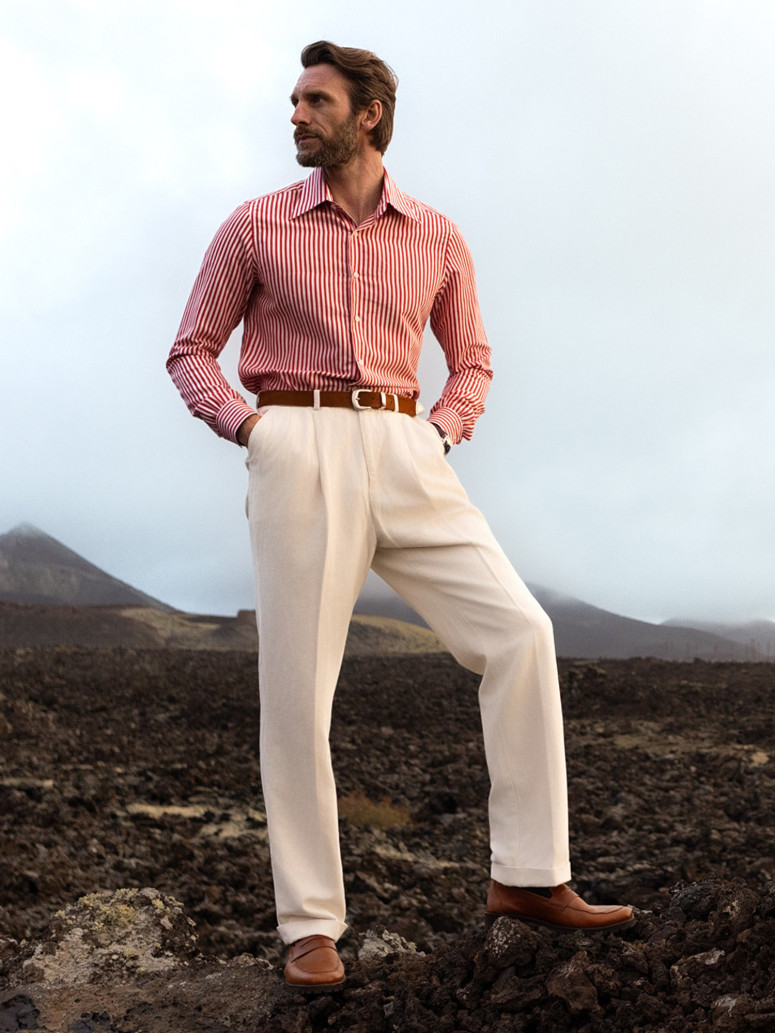
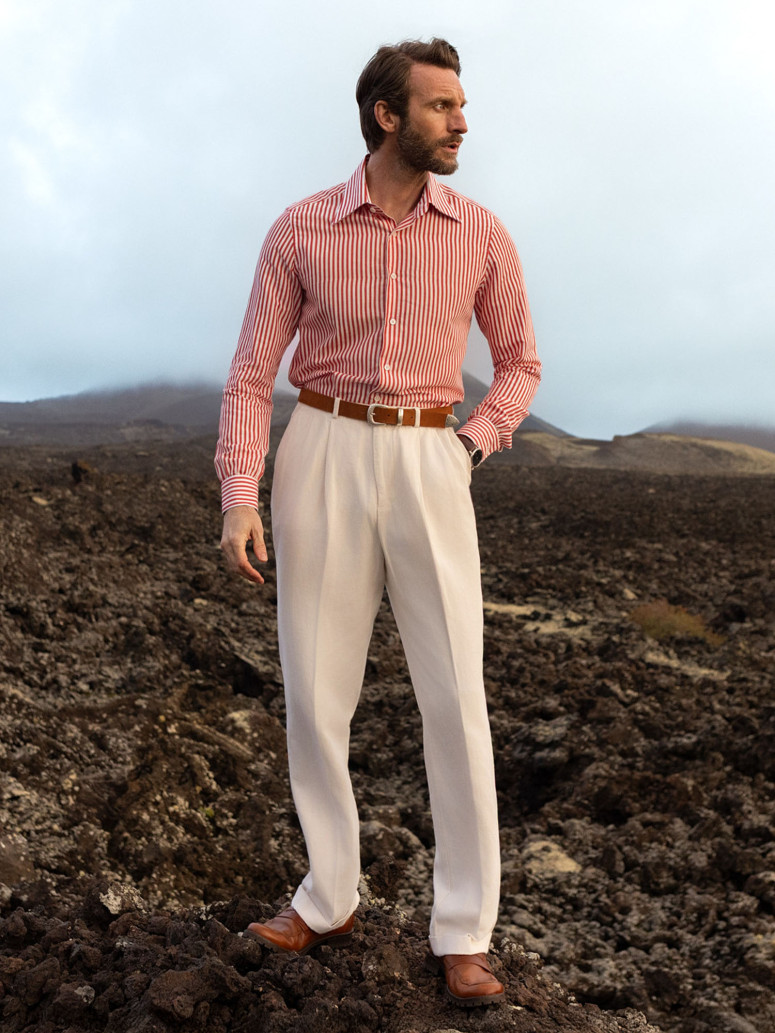
Leave aside worn jeans or too-skinny chinos! Old money trousers are worn straight, preferably with pleats, in natural materials: wool, twill cotton, etc. Always well-pressed, never neglected.
Leather loafers or derbies
For footwear, the old money style favors loafers in grained leather, soft derbies, or buckled shoes. Sometimes patinated, always well-maintained. The Ivy League style also inspires models like penny loafers or boat shoes.
Subtle accessories
Inherited watch (or one that gives that impression), club tie, slim belt, cufflinks in solid silver or silk pocket square: the old money accessory is discreet but refined, no detail is left to chance!

A style more than a trend
The old money style is not just about clothing. It refers to a way of life: reserved, educated, attached to traditions. It disregards seasonal trends and prefers a wardrobe built over time.
An elegance that doesn't seek to seduce
The old money style doesn't seek to attract attention, let alone seduce at all costs: it's based on the idea that elegance is a private matter. You dress well for yourself, out of upbringing, out of respect for certain standards, not to be noticed.
A look that is cultivated over time
Adopting the old money style doesn't mean buying a few vintage pieces or "old-fashioned" clothing. It's about developing coherence, a certain bearing, which also relies on posture, carriage, behavior: clothing is only the visible part of this culture.
Can you really adopt the old money style?
Yes, provided you avoid caricature! Copying the style without understanding its spirit can quickly turn into a theatrical costume. Here are some tips to draw inspiration intelligently.
Focus on quality
Always prefer a well-cut garment in a beautiful material to a trendy piece with poor finishing. No need to overdo it: a well-tailored double-breasted blazer and polished leather shoes are enough to set the tone.

Stay understated
Choose neutral colors, classic patterns (stripes, discreet checks) and traditional cuts: the old money style is rarely flashy, but always elegant.
Work on the overall look
The old money style is based on overall coherence: it's not an accumulation of "chic" elements, but a controlled silhouette, an assumed taste for sobriety and refinement.
The old money style is not a passing trend, but a form of lasting elegance, almost timeless. It relies on classic pieces, noble materials, perfect cuts, and a certain idea of discretion.